EN
EN
 AR
AR
 NL
NL
 FR
FR
 DE
DE
 IT
IT
 JA
JA
 KO
KO
 PT
PT
 RU
RU
 ES
ES
 TL
TL
 ID
ID
 VI
VI
 TR
TR

Why Electric Press Brakes are Overtaking Hydraulic Models
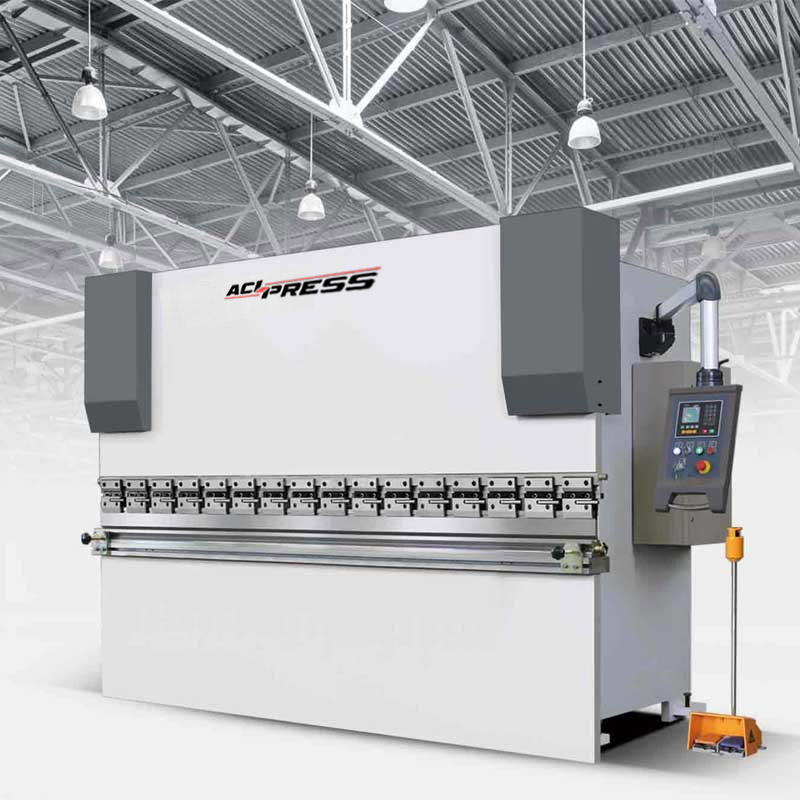
The metal fabrication industry is witnessing a significant shift as Electric Press Brakes rapidly displace traditional hydraulic systems. While hydraulic machines have been the industry workhorse for decades, the demand for higher precision, sustainability, and lower operational costs is driving this "electric revolution."
1. Superior Precision and Repeatability
The core advantage of electric models lies in their drive system. Unlike hydraulic cylinders that can be affected by oil temperature fluctuations and seal wear, electric press brake machines use servo-motor driven systems (often paired with heavy-duty ball screws or belts). This allows for micron-level positioning accuracy.
Key Benefit: Because the ram movement is controlled directly by digital signals, the repeatability is nearly perfect, drastically reducing scrap rates in complex bending jobs.
2. Energy Efficiency and Sustainability
Hydraulic machines require a pump to run constantly to maintain pressure, even when the machine is idling. In contrast, electric press brakes only consume significant power during the actual bending stroke.
Energy Savings: Studies show that electric models can reduce energy consumption by up to 50% or more.
Eco-Friendly: With no hydraulic oil to leak, filter, or dispose of, these machines provide a much cleaner footprint for "green" manufacturing initiatives.
3. Lower Maintenance and Faster Cycles
Without the complex network of valves, hoses, and pumps, electric press brakes have fewer failure points. This translates to minimal downtime and lower long-term maintenance costs. Furthermore, the rapid acceleration and deceleration of servo motors allow for faster approach and return speeds, significantly shortening cycle times for small-to-medium-sized parts.
While hydraulic machines still hold an edge in ultra-heavy-duty applications (1000+ tons), the Electric Press Brake has become the gold standard for high-speed, high-precision, and cost-effective fabrication. For modern shops looking to stay competitive in 2026, the transition to electric is no longer a luxury—it is a strategic necessity.
Recommended Products
Hot News
-
A Guide to Eliminating Laser Cut Burr and Slag
2024-05-16
-
Performances of CNC press brake machine
2024-05-24
-
How to tell and choose torsion axis press brake machine and electro-hydraulic CNC press brake machine
2024-06-20
-
Mastering Metal Bends: The Indispensable Press Brake Machine
2025-02-08
-
Shearing Machine Maintenance Tips to Extend Equipment Lifespan
2025-02-08