
 EN
EN
 AR
AR
 NL
NL
 FR
FR
 DE
DE
 IT
IT
 JA
JA
 KO
KO
 PT
PT
 RU
RU
 ES
ES
 TL
TL
 ID
ID
 VI
VI
 TR
TR
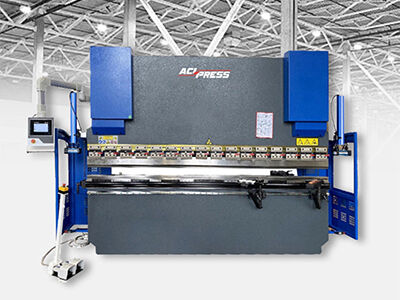
In the metalworking field, a press brake is a very essential tool to manipulate sheet metal. But not all press brakes are created equal. Differences between a traditional press brake and today’s CNC press brake When it comes to improving production capacity, it is important for companies to know the difference between an ordinary and current or modern day CNC (Computer Numerical Control) press brake. At Nanjing ACL Machinery Factory, we specialize in designing innovative bending machines and feel an educated customer is our best customer.
The Core Mechanism and Control System
The easiest way to tell them apart is the brains of their operation, or control system. A typical press brake needs to be watched and tended constantly. Bending angle is adjusted by operator, who also manually sets the position of back gauge and the stroke of the ram. This is the skill of a good technician not only to be able to use their mind and tools such as protractors but also to think of opportunities where a bend may actually help create the proper tonal workability we would like. Each such possibility is real and time consuming, and repeating the same bend operation to form several parts requires a consistent manual skill which may show some variation.
On the other hand a CNC press brake is controlled using a computer. The controlling unit is provided with means for manually introducing the bend parameters, i.e. angle, dimension and sequence of bends. Highly-advanced hydraulics and electric servos then carry out these commands with supreme accuracy. The back gauge is moved by several of axes and automatically positions the work piece. This computerized automation takes most of the guesswork out of the process, and on a machine like this one, it puts that complexity in the hands of a dependable digital brain, rather than that of a human operator.
Precision, Repeatability, and Efficiency
The CNC press brake is clearly superior in terms of accuracy and repeatability.. Traditional machines are manually operated and thus subject to human error. Even the best operator can create minor differentials in the angle or dimension when running a batch of parts. This can result in final product inconsistencies and the need for rework.
Where a CNC machine shines, however, is when you need to produce an accurate and repeatable part. The machine with perform the same bend angle and position on Part 1 and on part 1000, once the program is established and proofed. Such a high repeatability is of course mandatory in contemporary manufacturing when quality control and interchangeability are the main requirements. What's more, the efficiency increases are dramatic. CNC Press brakes cut setup times considerably, with parts that are more complex and have more bends. Switching from one job to another is frequently a phone call away from another program, where with a traditional machine entire manual recalibration is necessary.
The Practical Applications in Modern Fabrication
The conventional press brake vs the CNC press brake decision always comes down to the application, as well as production requirements. A manual press brake may work out to be more cost-effective for shops that only have a requirement of very low volume work, simple bends or where thin sheet metal precision is not crucial. It is a handy tool for standard fabrication jobs.
However, for any company engaged in batch production or manufacturing with complex part geometries or high-mix, low-volume applications, a CNC press brake is no longer an indulgence but a necessity. Its ability to recall an unlimited number of programs, permit complex bending sequences and interface with CAD/CAM systems simplifies the entire production cycle. At Nanjing ACL Machinery Factory, our CNC press brakes are designed to allow your business to expand its capabilities and bend even more complex parts, make less waste and lower cost, tough enough to help you compete in a busy marketplaces.
In summary, the standard press brake has its place in history and for a few niches but the CNC press brake is now and next for precision metal bending. It takes bending as a craft based on skill and turns it into a repeated, efficient engineering process.
