
 EN
EN
 AR
AR
 NL
NL
 FR
FR
 DE
DE
 IT
IT
 JA
JA
 KO
KO
 PT
PT
 RU
RU
 ES
ES
 TL
TL
 ID
ID
 VI
VI
 TR
TR
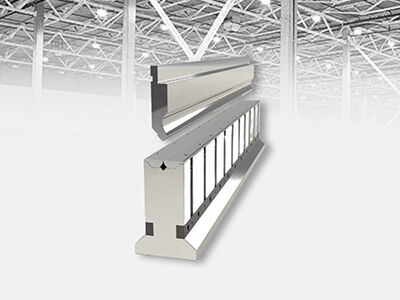
At Nanjing ACL Machinery Factory, we believe that the right tooling properly mounted can help you improve bending. In this guide I will describe the most common mounting types to make sure you know what you are getting.
The Standard Tooling System
The standard tool is the most conventional and the most well known mounting method. It works on a basic concept where punch and die are being kept in the machine by clamps, wedges and bolts. The tooling has pairs of grooves or serrations that lock in with corresponding parts on the upper and lower beams of the press brake.
This system is famous for stable and rigid mounting. The precision mechanical lock is extremely stable, for heavy bending applications and high tonnage forces. It reduces deflection and keeps tooling from pulling back during use. Standard tooling takes more fiddling with than newer designs, but you can do anything with them. It is compatible with a variety of cutting tools, facilitating use by job shops that have to machine an assorted mix of parts. First costs are typically lower, and the tooling is largely transferable between various press brakes in a same company’s line.
The 3D Quick-Change Tooling System
For shops whose job changeover velocity is at a premium, 3D quick-change tooling will be more than a small step in the right direction. This unique mounting system is engineered to save setup time when transitioning from one job to the next, taking minutes instead of hours. It generally also incorporates a special ever-present clamping device connected to the press brake ram and bed.
What distinguishes this system is its auto or semi-auto clamping mechanism. By the touch of a button, or manually by hand it is now possible to release all tools on upper and lower simultaneously. This also spares the operator the task of unbolting and bolting several screws for each tool change. Apart from the lightning speed, you get some incredible accuracy with the 3D system. Preset die heights eliminate a major variable in die setup; and the result is more consistent tool positioning (which helps maintain uniform bend angles). This even makes it a perfect fit for high-mix, low-volume jobs shops where press brake up-time is everything.
The Universal Clamping System
The universal clamping system splits the difference, it contains a bit of that standard tooling flexibility while providing some of the production efficiency of an expedited setup. The single universal clamp design allows for a variety of tooling shank sizes without the need for retro fitting or adapter plates.
That flexibility is its strength. Fabricators are not restricted to only one proprietary tooling series, providing more options in the use of tools from their stock. The clamping system is often quicker to use than the series of wedges and bolts in a standard system, but may not be as instantaneous as an automatic 3D clamp. It offers an economical solution for the shop needing more flexibility than standard tooling provides before investing in a full quick-change automation package. It simplifies the procedure of tool management and minimizes chances of mistake during setting, because less parts to be handled.
Selecting the Proper Mounting Style for your Application
Choosing the right type of mounting is strategic, and depends on the requirements in your production. There is no one-size-fits-all answer. You need to take a good look at your work. The stiffness of a standard system may be sufficient for high-volume production of similar parts. But if your shop is diverse in the many short-run jobs that it produces, the time-savings you could gain with a 3D quick-change system could be what sets you apart from all those thicker troops of competition.
You’ll also want to consider instructor skill level, the precision required and both up-front tooling investment as well as long-term run costs. At Nanjing ACL Machinery Factory, we specialize in assisting our customers make these choices. We offer expert advice and precision tooling and bending solutions that integrate seamlessly with your existing Amada press brake which means you have more time to maximize the performance of your production tools, access industry knowledge from decades of working in the field or rely on us where at any stage you may need an answer on how best to use or optimize your metalwork machinery.
